Macros Matter, But They’re Not One-Size-Fits-All
There is no perfect macro split for everyone. Your goals, training, age, health, and lifestyle all play a role in how much you should eat and where those calories should come from.
Spend enough time on fitness social media, and sooner or later, someone will tell you they have figured out the perfect way to eat.
Maybe it is a specific ratio of protein, carbs, and fat. Maybe carbs are evil this month. Maybe dietary fat is making a comeback as the villain. Give the internet enough time, and I am sure we will eventually find a way to blame broccoli.
The reality is a lot less dramatic.
There is no single calorie target or macro split that is right for everybody.
Your nutritional needs depend on you. Your size matters. Your age matters. How active you are matters. Your training matters. Your goals matter. Your health matters. Even things like your schedule, food preferences, budget, and what you can realistically stick with matter.
That does not mean calories and macros are useless. I track them myself, and I think they can be incredibly helpful.
They are just tools.
They are not commandments.
What Are Macros, Anyway?
When people talk about "macros," they are talking about macronutrients.
The three we normally track are:
Protein
Carbohydrates
Fat
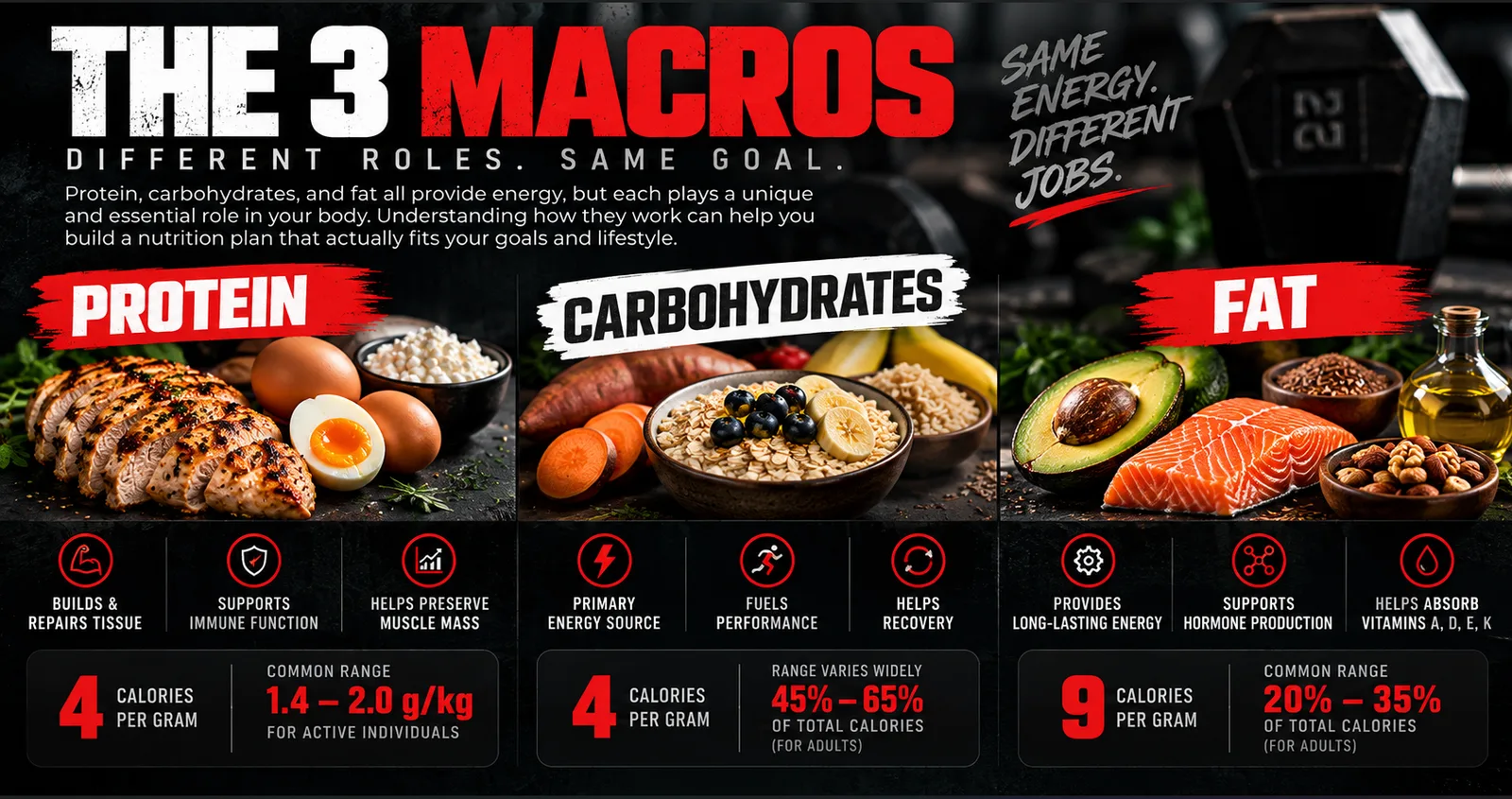
Protein and carbohydrates each provide about 4 calories per gram. Fat provides about 9 calories per gram.
That is the math behind most calorie and macro tracking apps.
What sometimes gets lost in all that math is that each one has a job.
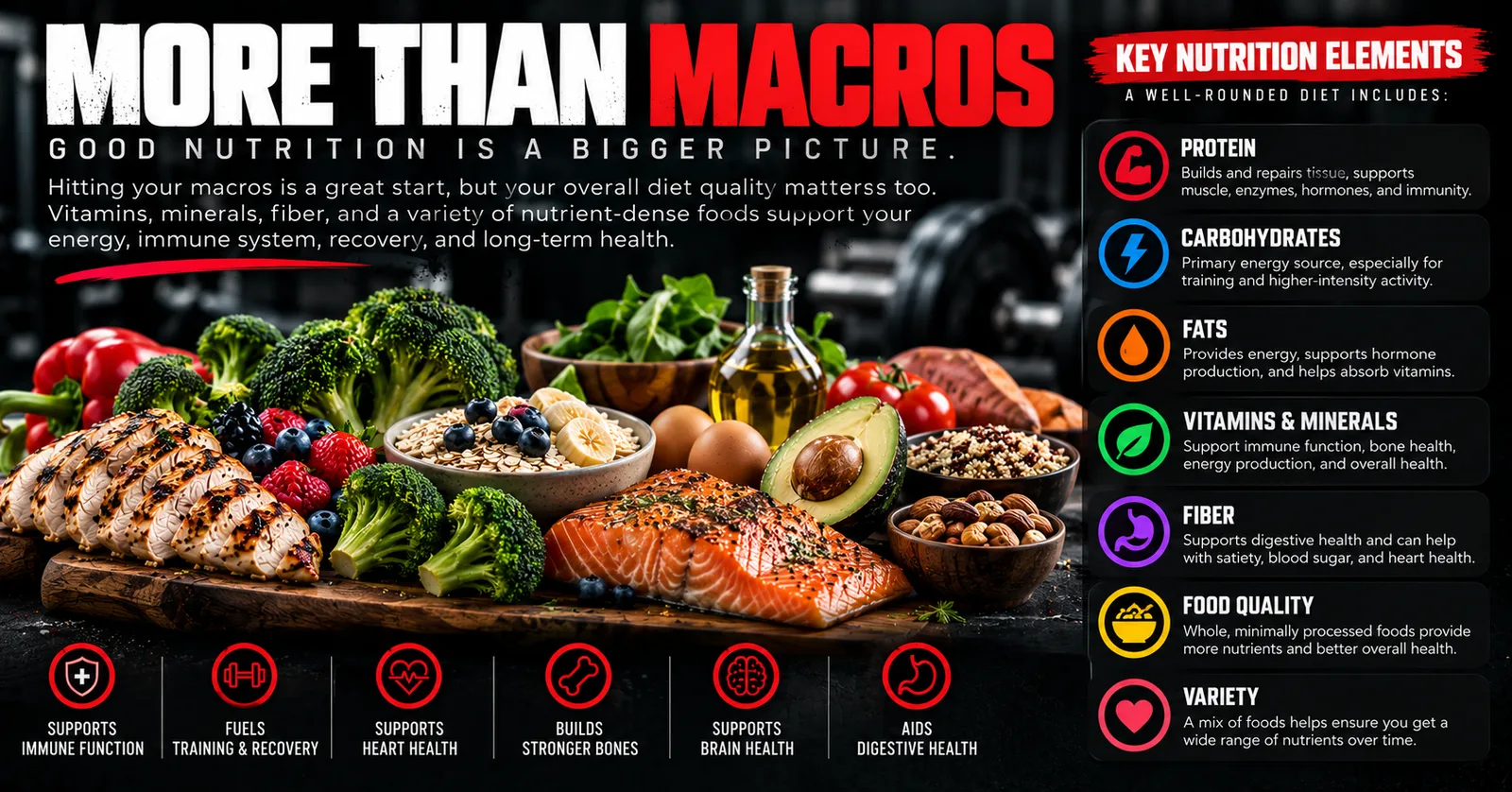
Protein provides amino acids your body uses to build and repair tissues. Muscle is the obvious example for anyone who trains, but protein is also involved in enzymes, hormones, immune function, and plenty of other things happening inside your body that have nothing to do with your bench press.
Carbohydrates are an important energy source, particularly during more intense exercise. Sports nutrition guidance has long recognized the importance of adequate carbohydrate and protein intake for people training hard, both for performance and recovery. PubMed
Fat provides energy, essential fatty acids, helps form cell membranes, and helps your body absorb fat-soluble vitamins.
The National Academies' broad Acceptable Macronutrient Distribution Ranges for adults are 45 to 65 percent of calories from carbohydrate, 20 to 35 percent from fat, and 10 to 35 percent from protein. Notice how wide those ranges are. That should probably be the first clue that there is not one magical percentage for everybody. National Academies
There Is No Perfect Macro Split
This is probably the biggest point I want people to take away from this article: there is no universally perfect ratio of protein, carbohydrates, and fat.
A 40/30/30 split is not automatically better than 35/35/30, and eating low carb is not inherently superior to eating higher carb. The right balance depends on the person, what they are trying to accomplish, how active they are, and how their body responds.
Even the American Diabetes Association, where nutrition plays a major role in disease management, does not recommend one ideal percentage of calories from carbohydrate, protein, and fat for everyone. Its 2026 guidance specifically emphasizes that macronutrient distribution should be individualized based on factors such as eating patterns, personal preferences, metabolic goals, and treatment needs. Diabetes Journals
If there really were one perfect ratio, nutrition would be a lot simpler. We could plug everyone into the same formula and call it a day. Unfortunately, bodies, goals, lifestyles, and health conditions do not work that way.
Instead of asking, "What is the best macro split?" I think the more useful question is:
What makes sense for this person, with this goal, at this point in their life?
That is where useful nutrition planning actually starts.
Calories Matter, But a Calculator Is Still Just a Calculator
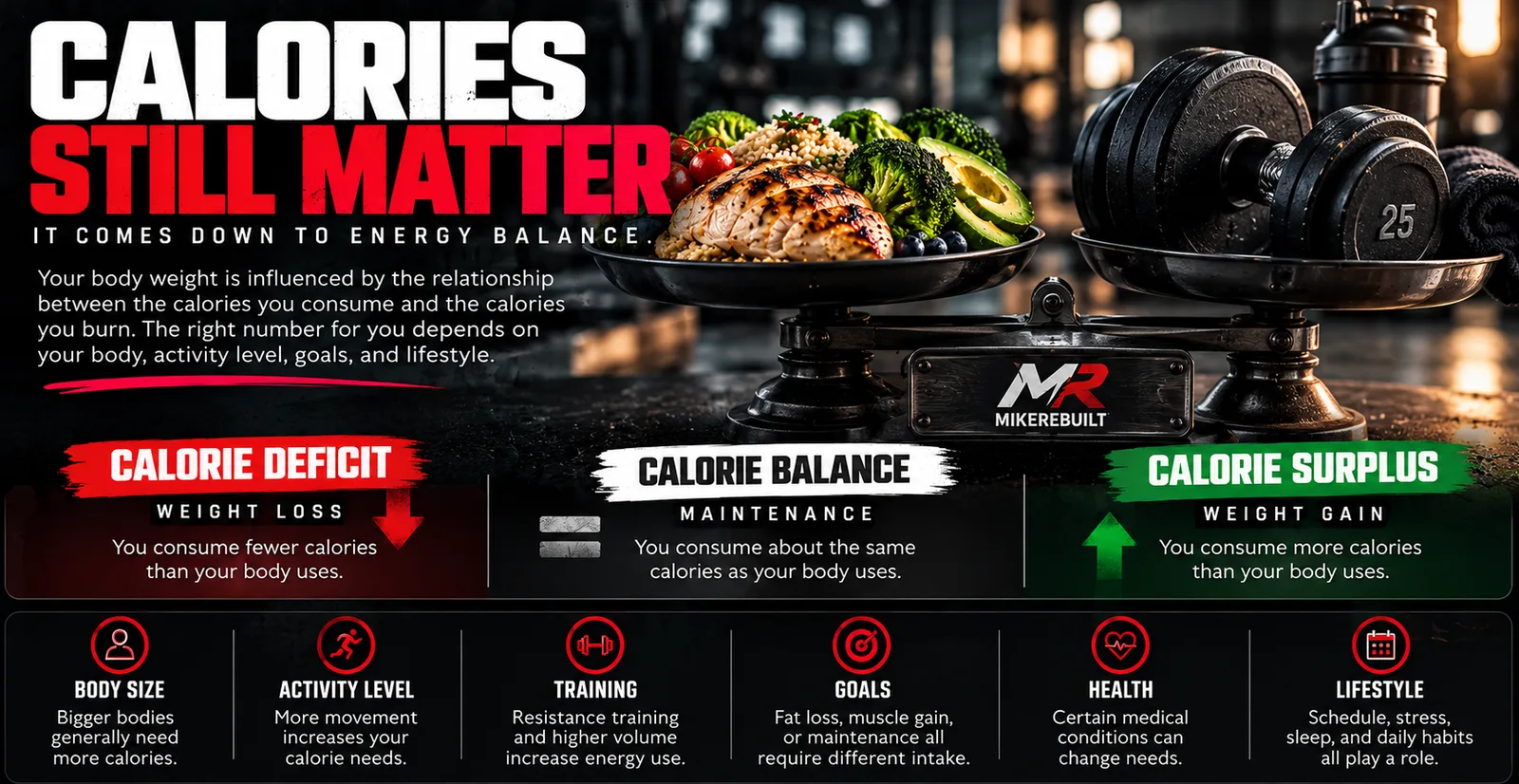
Calories matter, and there is no real reason to pretend otherwise. Over time, body weight is influenced by the relationship between how much energy you take in and how much your body uses. If someone wants to lose weight, that usually requires a sustained calorie deficit. If someone wants to gain weight, energy intake generally needs to exceed energy expenditure (a caloric surplus).
Where things get more complicated is when people treat the human body like a fixed spreadsheet. Your body is constantly adapting. As you lose or gain weight, your energy needs can change. Your activity level can change. Hunger can change. Training can change. People also tend to move more or less without even realizing it, depending on how much they eat and how they feel.
That is why the old idea that you can calculate a fixed calorie deficit and then predict an exact amount of weight loss every single week does not hold up very well over time. The National Institutes of Health actually developed its Body Weight Planner around a dynamic model that accounts for changes in calorie intake, physical activity, and body weight rather than assuming everything stays constant. NIDDK
So when I calculate someone’s starting calorie target, that is exactly what I consider it: a starting point. You follow the plan, collect data, pay attention to what is happening, and then adjust when needed.
No calculator gets the final vote. Your actual results do. That's why if you use my app Gainsheet, you'll notice that after a couple of weeks it will prompt you to adjust your plan based on your actual logged results.
Protein Deserves Attention If You Train
Protein gets a lot of attention in the fitness world, and some of that attention is absolutely deserved. Resistance training provides the stimulus for your body to adapt, while dietary protein provides the amino acids needed to support muscle protein synthesis, repair, and recovery.
For most healthy people who exercise regularly, the International Society of Sports Nutrition recommends roughly 0.64 to 0.91 grams of protein per pound of body weight per day as sufficient for building or maintaining muscle. Most of the time, you'll just be told "1 gram per pound of body weight." PubMed Central (PMC)
For example, at 180 pounds, that works out to about 115-164 grams of protein per day.
That does not mean every 180-pound person needs exactly 164 grams, and it definitely does not mean 250 grams must be better simply because 250 is a bigger number.
A large meta-analysis examining resistance training and protein supplementation found that additional gains in fat-free mass tended to plateau at an average total protein intake of roughly 0.73 grams per pound of body weight per day, although there was some uncertainty about the exact point at which that benefit flattened out. British Journal of Sports Medicine
Protein needs can also shift depending on the person. Training volume matters, whether someone is dieting or maintaining weight, and factors like age, body composition, and overall health can all influence what makes sense.
Older adults are a good example. ESPEN guidance recommends at least about 0.45 grams of protein per pound of body weight per day for older adults, with intake adjusted based on activity level, nutritional status, disease, and tolerance. Clinical Nutrition
The point is not to memorize one perfect number. It is to understand what the number represents and whether it actually makes sense for the individual using it.
Carbs Are Not the Enemy
Carbohydrates have somehow become the macro people feel guilty about eating, which is a little strange considering how useful they can be for anyone who trains hard.
For active people, carbohydrates can be an extremely effective fuel source. Muscle glycogen plays an important role during high-intensity exercise, and sports nutrition guidance consistently recognizes carbohydrate availability as a key factor in supporting demanding training and recovery. PubMed
How much carbohydrate someone needs can vary a lot. A person running long distances several days a week has very different demands than someone who lifts three times a week and spends most of the day sitting at a desk. A competitive athlete training twice a day is in a completely different situation from someone trying to lose a few pounds and improve overall health.
Two people can weigh exactly the same and still have very different energy and carbohydrate needs. That is why giving everyone the same percentage of calories from carbs does not make much sense.
And no, eating carbohydrates does not automatically cause body fat gain. Consistently consuming more total energy than your body needs is the bigger issue.
It is also worth separating the idea that carbohydrates are useful from the idea that all carbohydrate foods are nutritionally identical. Fruit contains carbohydrates. Oatmeal contains carbohydrates. Beans contain carbohydrates. Candy contains carbohydrates. They may all show up in the same carb column in your tracking app, but nutritionally, they are clearly not the same thing.
That is why macro tracking can be helpful, but it still needs context.
Fat Is Not the Enemy Either
Dietary fat had its own turn as the villain for a while. Nutrition trends have a funny way of rotating through the same arguments every few years.
The reality is much less dramatic. Fat is essential.
Your body needs essential fatty acids, and dietary fat plays important roles in normal cell function, hormone production, and the absorption of fat-soluble vitamins like A, D, E, and K.
That does not mean the type of fat you eat is irrelevant. The American Heart Association recommends emphasizing sources of unsaturated fats rather than foods higher in saturated fat. Examples include nuts, seeds, fish, and non-tropical plant oils. American Heart Association
And once again, context matters.
Someone can eat exactly 70 grams of fat on two different days and end up with two completely different diets depending on where those grams came from. The number itself only tells part of the story.
That leads into something I think gets lost when people become too focused on macro targets: hitting the numbers does not automatically mean the overall diet is good.
Hitting Your Macros Does Not Automatically Mean You Ate Well
I like macro tracking, and I think it can be a really useful tool. It gives you a much clearer picture of how much you are eating and where those calories are coming from.
What I do not like is when people start treating the numbers like they are the entire story.
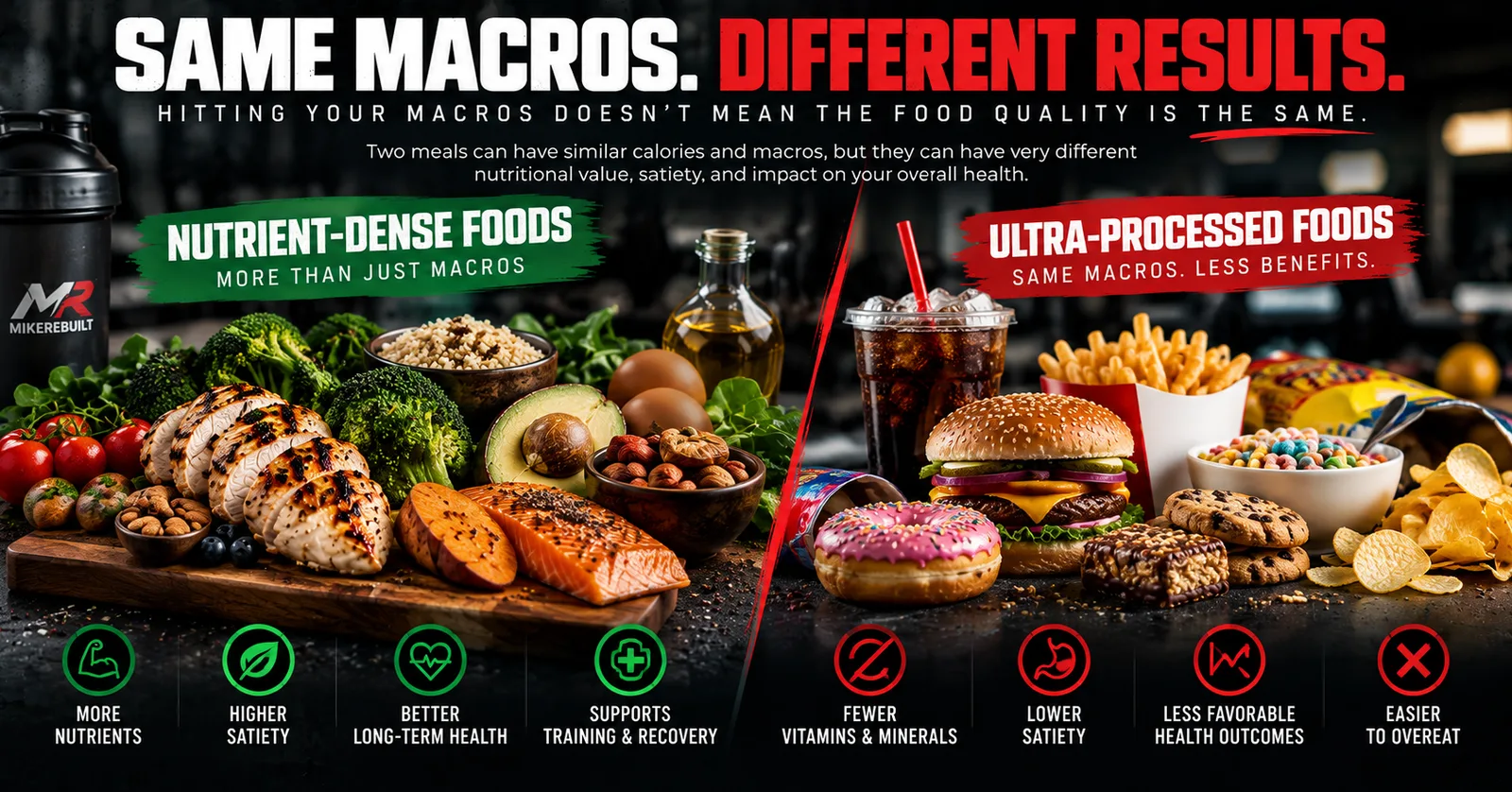
Your tracking app turning all the little circles green does not mean you have unlocked perfect nutrition. It simply means you hit the targets you entered for calories, protein, carbohydrates, and fat.
Those numbers are important, but they do not tell you everything about the quality of your diet.
Your body also needs vitamins, minerals, fiber, essential fatty acids, and enough variety to cover your nutritional needs over time. Two people can hit the exact same calories and macros while eating two completely different diets, and one of those diets can be far more nutrient-dense than the other.
Current U.S. dietary guidance recommends prioritizing nutrient-dense foods such as high-quality protein sources, vegetables, fruits, healthy fats, dairy, and whole grains, while limiting the share of the diet that comes from highly processed foods. health.gov
The American Heart Association takes a similar approach. Its 2026 guidance focuses on the overall eating pattern rather than one specific nutrient, with an emphasis on fruits and vegetables, whole grains, healthy protein sources, unsaturated fats, and minimally processed foods. www.heart.org
That does not mean you have to eat like a monk or avoid every food you enjoy. You can eat pizza. You can have dessert. You can go out to dinner with your family.
One meal does not determine the quality of your diet any more than one workout determines whether you are fit.
What matters much more is what you do consistently over time.
Your Goal Changes Your Nutrition
This is another reason I do not like handing everyone the same macro calculator and calling it a day. The plan needs to match the goal. This is another reason my fitness app Gainsheet uses dynamic plan generation.
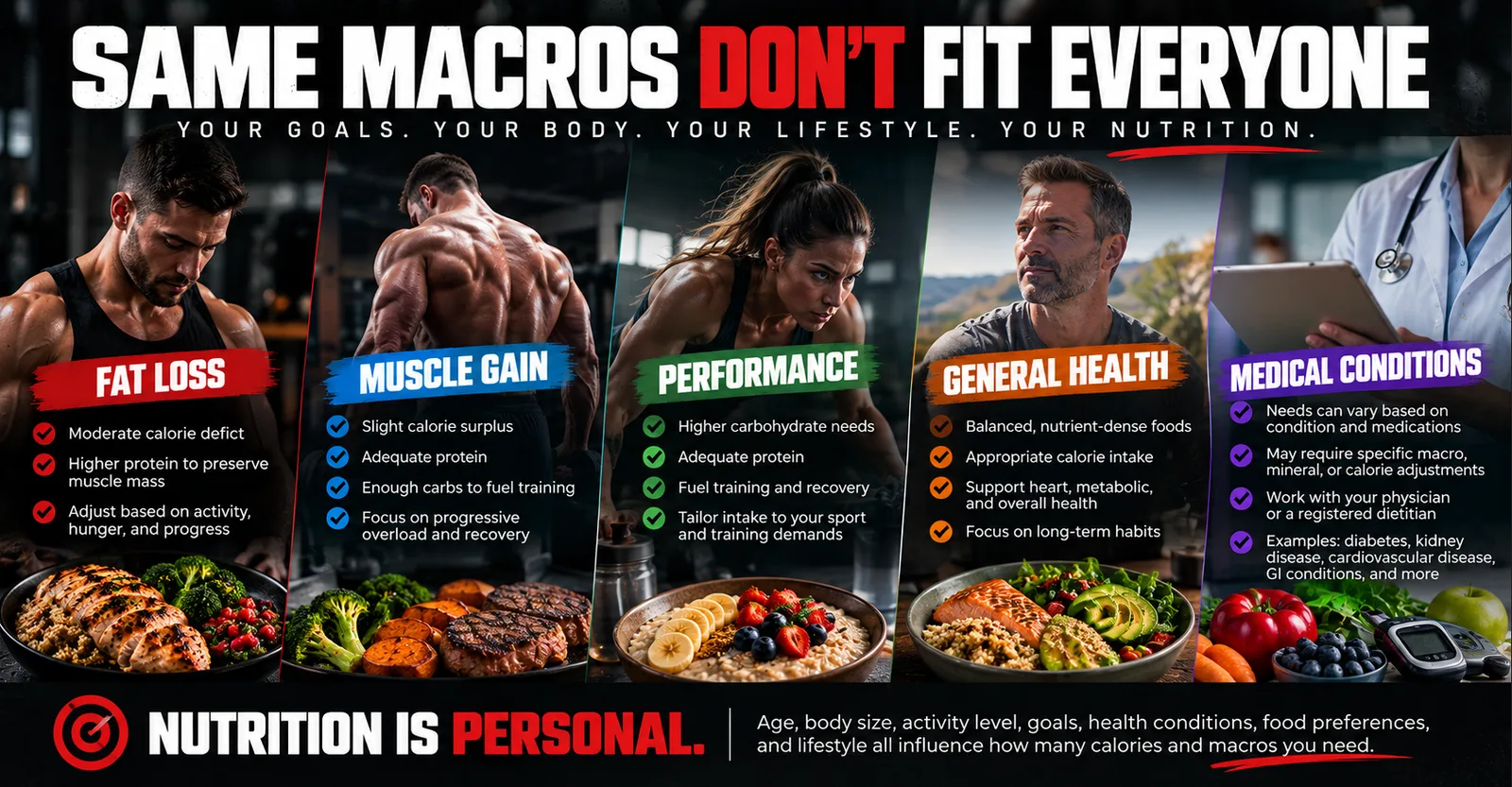
Someone trying to lose body fat, someone trying to build muscle, and someone training for performance are not all trying to solve the same problem. Their nutrition should reflect that.
Fat Loss
For fat loss, the main nutritional requirement is to create a caloric deficit that someone can maintain long enough to make progress.
Protein is especially useful because it can help support lean mass as weight comes down, particularly when resistance training is part of the plan.
But creating the biggest possible deficit is not automatically the smartest approach.
If your training starts falling apart, your energy is terrible, you are constantly hungry, and food is all you can think about, there is a good chance the plan is too aggressive.
A good fat loss plan should move you toward your goal without making the rest of your life miserable.
Muscle Gain
If your goal is adding muscle, resistance training is still doing most of the heavy lifting.
Get it? Get it?! It's doing the heavy lifting because.... oh never mind.
Nutrition supports that process by giving your body enough protein and total energy to recover and build new tissue. What people sometimes forget is that muscle gain takes time, even when everything is being done correctly.
You do not need to turn every bulk into an eating contest.
More food can help support growth, but more is not always better. The goal is to provide enough energy to support training and muscle gain without adding far more body fat than necessary along the way. This is often referred to as a "dirty bulk".
Performance
When performance is the goal, the type of training matters even more.
A distance runner, powerlifter, bodybuilder, soccer player, CrossFit athlete, and recreational gym member are all placing different demands on their bodies. It would not make much sense to fuel all of them exactly the same way.
Sports nutrition guidance recommends matching nutrition strategies to the specific demands of training and competition rather than applying a single universal plan to every athlete. PubMed
Someone doing hours of endurance work each week may need much more carbohydrate and total energy than someone whose training is primarily lower-volume strength work. The goal is to support the work the person is actually doing.
General Health
Sometimes the goal has very little to do with getting leaner, gaining muscle, or chasing a number in the gym.
Improving blood pressure, blood glucose, cholesterol, energy, strength, mobility, and overall health may matter far more.
That still counts as progress.
In fact, for many people, those changes are far more meaningful than whether they can see another abdominal muscle in the mirror. I am one of those people.
Nutrition should support the goal that actually matters to the person, not the goal that happens to be popular on social media.
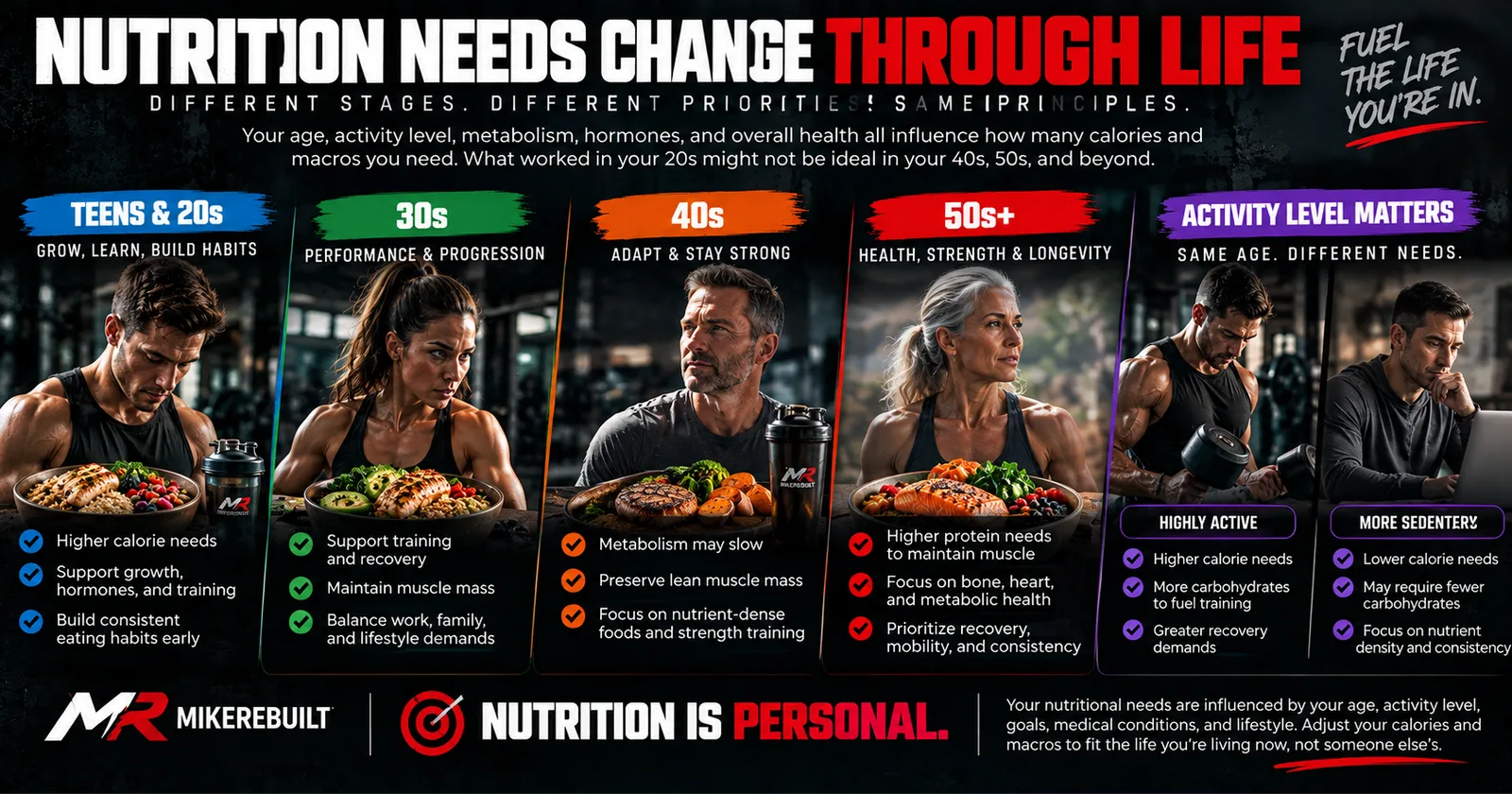
Age and Activity Level Matter
Nutrition should change when your circumstances change.
A 25-year-old who weighs 200 pounds, works construction, and trains five days a week is probably going to need a very different amount of food than a 55-year-old who weighs the same amount, works at a desk, and trains twice a week.
Same body weight. Very different lives.
That is one reason body weight alone does not tell you much about what someone should eat. Activity level, training volume, occupation, recovery demands, and age all matter.
As we get older, things like muscle mass, appetite, activity, and energy needs can shift. Preserving lean mass also becomes more important, which is one reason resistance training and adequate nutrition continue to matter throughout adulthood. Clinical Nutrition
That does not mean your metabolism suddenly files for retirement when you turn 40.
The internet has already made turning 40 sound dramatic enough.
It simply means your nutrition plan should be flexible as your body, activity, and lifestyle change. What worked perfectly for you ten years ago may still be close, or it may need some adjustment. Either way, that is normal.
Medical Conditions Can Change the Conversation Completely
This is where generic nutrition advice can go from being mildly unhelpful to being a real problem.
A plan that works perfectly well for a healthy person may not be appropriate for someone managing a medical condition, taking certain medications, or dealing with a health issue that changes how nutrients should be handled.
Diabetes is a good example. The American Diabetes Association recommends individualized eating plans and notes that no single eating pattern or macronutrient distribution works for everyone with diabetes. Medication use, blood glucose goals, food preferences, total calorie intake, food quality, and other health conditions can all affect what makes sense. Diabetes Journals
Chronic kidney disease is another example. Depending on the stage of disease and the individual, factors such as protein, sodium, potassium, phosphorus, and fluid intake may need to be adjusted. Protein needs can even change depending on whether someone is receiving dialysis. NIDDK
Cardiovascular disease can shift priorities too, particularly regarding overall dietary patterns, sodium, saturated fat, fiber-rich foods, and total energy intake. American Heart Association
And those are just a few examples. Food allergies, gastrointestinal conditions, pregnancy, nutrient deficiencies, medications, and a history of disordered eating can all change the way nutrition should be approached.
This is why there needs to be a clear line between general fitness nutrition and medical nutrition therapy.
A coach can help with education, habits, accountability, tracking, and general nutrition structure. But when a medical condition meaningfully changes what someone should eat, that is the point at which a physician or registered dietitian nutritionist should be part of the conversation.
Trying to coach outside your scope does not make you more helpful. It just makes you confidently wrong, which is not exactly the goal.
Knowing when something is outside your lane is part of being a good coach.
The Best Nutrition Plan Still Has to Work in Real Life
You can build a nutrition plan that looks perfect on paper. The calories are dialed in, the macros are exact, the meal timing is organized, and every nutrient box seems to be checked.
Then you hand that plan to someone who hates half the foods on it, works twelve-hour shifts, has three kids, travels for work, and has absolutely no interest in spending Sunday afternoon weighing chicken into fourteen identical plastic containers.
At that point, it is no longer a perfect plan.
Nutrition has to work in the real world, not just in a spreadsheet. Food preferences matter. Culture matters. Budget matters. Schedule matters. Cooking ability matters. The plan has to fit the person well enough that they can actually follow it without feeling like meal prep has become a second job.
The American Diabetes Association's current guidance reflects this same idea by emphasizing individual preferences and nutritional needs when developing eating plans. Diabetes Journals
That is not a minor detail. It is one of the biggest reasons some plans work, and others fall apart.
A theoretically perfect plan that someone cannot stick to is not better than a very good plan they can follow consistently.
Consistency wins almost every time.
How I Think About Setting Macros
I prefer to keep the process pretty straightforward. Nutrition can get complicated fast if you let it, but most people do not need a dozen formulas and a spreadsheet that looks like it came from NASA.
The first step is figuring out the actual goal. Are we trying to lose body fat, build muscle, improve performance, maintain weight, or just feel better and be healthier? That goal gives the rest of the plan some direction.
From there, I estimate calorie needs based on factors such as body size, activity level, and training. It is not meant to be a perfect number carved in stone. It is a reasonable place to start.
Protein comes next. The target should make sense for the individual based on their goals, activity, body composition, age, and health, not just whatever number happens to be popular online that week.
Dietary fat also needs enough room in the plan to support normal health and make the diet sustainable. There is no prize for driving fat intake as low as possible just to make the numbers look cleaner.
Carbohydrates can then be adjusted around the person’s activity level, training demands, preferences, and remaining calorie needs. If someone trains hard, carbs can be extremely useful for fueling that work and supporting recovery.
Food quality still matters too. Fruits and vegetables matter. Fiber matters. Micronutrients matter. Hitting your macros does not mean much if the rest of the diet is built entirely around foods that contribute very little nutritionally.
Then comes the part that actually tells us whether the plan is working: watching what happens.
Is body weight moving in the intended direction? Are measurements changing? Is strength improving? How is recovery? How is hunger? How is energy? Most importantly, can the person consistently follow the plan?
That last question matters more than people think. A plan only works if someone can realistically stick with it.
Macros Are a Tool, Not the Goal
There is nothing wrong with tracking your food, paying attention to protein intake, or knowing roughly how many calories you should eat. Used properly, those things can remove a lot of guesswork and make nutrition much easier to manage.
The problem starts when people assume that whatever number works for somebody else must be the right number for them, too. Nutrition is more personal than that. Your intake should reflect your body, activity level, health, goals, and the life you actually live. As those things change, your nutrition should change with them.
Protein matters. Carbohydrates matter. Dietary fat matters. Calories matter. Food quality matters. And none of it works very well without consistency.
You do not need a perfect diet. You need a plan that makes sense for you, supports your health and training, moves you toward your goals, and is realistic enough that you can keep following it.
That may not make for the most exciting 15-second fitness video, but it tends to work a lot better in the real world.
Sources
1. U.S. Department of Health and Human Services and U.S. Department of Agriculture. Dietary Guidelines for Americans, 2025-2030. 10th Edition. January 2026. The current federal guidelines prioritize whole, nutrient-dense foods and provide nutrition guidance across the lifespan. health.gov
Dietary Guidelines for Americans
2. Jäger R, Kerksick CM, Campbell BI, et al. International Society of Sports Nutrition Position Stand: Protein and Exercise. Journal of the International Society of Sports Nutrition. 2017;14:20. The position stand concludes that roughly 1.4 to 2.0 g/kg/day is sufficient for most healthy exercising people seeking to build or maintain muscle. PubMed Central (PMC)
ISSN Protein and Exercise Position Stand
3. Morton RW, Murphy KT, McKellar SR, et al. A systematic review, meta-analysis and meta-regression of the effect of protein supplementation on resistance training-induced gains in muscle mass and strength in healthy adults. British Journal of Sports Medicine. 2018;52:376-384. British Journal of Sports Medicine
Protein and Resistance Training Meta-Analysis
4. Thomas DT, Erdman KA, Burke LM. Position of the Academy of Nutrition and Dietetics, Dietitians of Canada, and the American College of Sports Medicine: Nutrition and Athletic Performance. Journal of the Academy of Nutrition and Dietetics. 2016;116(3):501-528. PubMed
Nutrition and Athletic Performance
5. American Diabetes Association. Standards of Care in Diabetes, 2026: Facilitating Positive Health Behaviors and Well-being to Improve Health Outcomes. Diabetes Care. The guidance emphasizes individualized nutrition rather than a single prescribed macronutrient distribution. Diabetes Journals
ADA Standards of Care in Diabetes 2026
6. Lichtenstein AH, Khera A, Anderson CAM, et al. 2026 Dietary Guidance to Improve Cardiovascular Health: A Scientific Statement From the American Heart Association. Circulation. Published March 31, 2026. professional.heart.org
American Heart Association 2026 Dietary Guidance
7. National Institute of Diabetes and Digestive and Kidney Diseases. Healthy Eating for Adults with Chronic Kidney Disease. NIDDK explains why protein, potassium, phosphorus, sodium, and fluid requirements may need to be individualized for people with CKD. NIDDK
NIDDK Chronic Kidney Disease Nutrition Guidance
8. National Institute of Diabetes and Digestive and Kidney Diseases. NIH Body Weight Planner. The tool uses a dynamic model of changes in calorie intake, activity, and body weight rather than assuming weight changes at a fixed rate forever. NIDDK
NIH Body Weight Planner
9. Volkert D, Beck AM, Cederholm T, et al. ESPEN Practical Guideline: Clinical Nutrition and Hydration in Geriatrics. Clinical Nutrition. 2022;41(4):958-989. Clinical Nutrition
ESPEN Geriatric Nutrition Guideline
This article is intended for general education and is not medical nutrition therapy. Individual nutritional needs can change significantly with certain medical conditions, medications, pregnancy, kidney disease, diabetes, cardiovascular disease, gastrointestinal disease, or a history of disordered eating. In those situations, nutrition decisions should be made with an appropriate health care professional or registered dietitian nutritionist.
Keep reading
Persistence Over Perfection: the power of showing up
Consistency beats perfection. Discover why showing up, building sustainable habits, and staying persistent matter more than having a perfect workout every time.
Read the post